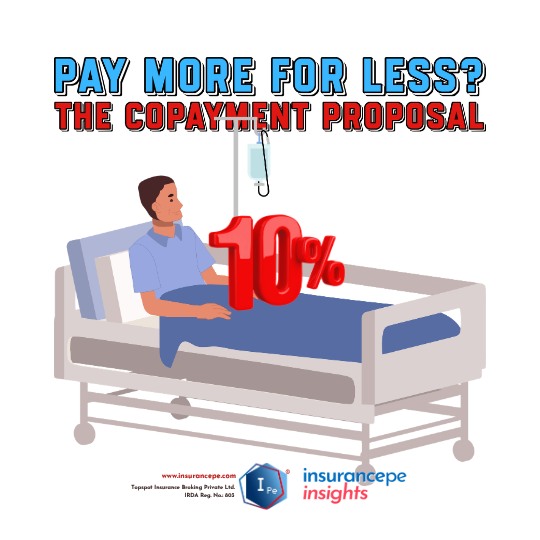
Health insurance & Cohort-based pricing

You may have heard the phrase ‘cohort-based pricing’ being tossed around a lot recently; owing to the news that the regulator IRDAI is considering a proposal from health insurers to bring back said pricing in health insurance.
Bring ‘back’ – yes, because cohort-based pricing is similar to claim-based loading which was earlier abolished by the IRDAI in 2013!
What is cohort-based pricing?
With cohort-based pricing, health insurance premiums are determined based on the risk profile of a group (aka cohort) of individuals with similar risk factors and pricing their insurance accordingly, rather than levelling out the premium over the entire portfolio of an insurer.
How does it work?
This concept seems to propose separate premium pricing for policyholders claiming under their health insurance policy. When a cohort claims in a particular year, their premium will increase by a certain period as compared to a cohort with no claims in that year.
The idea behind cohort-based pricing is that since individuals with similar risk profiles are in a cohort, they should therefore pay similar premiums.
Why is this happening?
With more claims and higher payouts, health insurers are under greater financial strain. As per an ET Now report, during the years 2021-23, health insurance premiums have increased by more than 30 per cent but the number of policyholders has not increased by much. As a result, some health insurers have devised a pricing strategy to manage their escalating claim costs.
What are the concerns?
The first, most obvious concern is that of fairness. While a cohort with favourable claims experience may pay lower premiums, the opposite is also true. With higher-risk individuals (eg. older people, people with pre-existing conditions etc.) having to pay higher premiums, there will likely be a point at which coverage becomes unaffordable thus defeating the very purpose of insurance.
- Make redundant the purpose of insurance by violating a principle of insurance of “spreading the losses of an unfortunate few amongst many” to keep premiums equalized.
- Higher premiums for certain groups that are considered higher risk.
- Dissatisfaction among customers of higher-risk cohorts who feel the pricing is unfair.
- May restrict choice and flexibility of coverage to higher-risk individuals.
What may be the benefits?
Cohort-based pricing allows health insurers to tailor pricing and coverage options to specific groups, which can help them more accurately predict costs and set competitive premiums.
- May support more accurate pricing based on the specific risk characteristics of each group.
- More customization and flexibility in pricing based on the unique needs and demographics of each cohort.
- Insurer will be able to better control costs by ensuring that each group is charged an appropriate premium.
- Promote transparency in pricing, as each cohort is treated differently based on their individual risk factors.
This blog post is brought to you by the minds at insurancepe!
Got questions or doubts about anything insurance?
Need advice or help understanding your insurance needs?
Want the best bang for your buck when buying insurance?
We got you!
Reach out to us at:
Whatsapp: 89779 18030
Phone: 040 6631 5464
E-mail: contact@insurancepe.com
Visit us at: www.insurancepe.com