
Air pollution? Pay more for health insurance
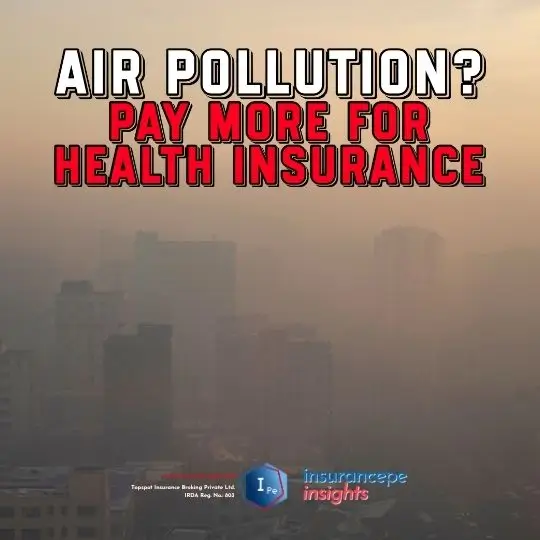
On Diwali day, 8 November 2026, Delhi’s 24-hour average AQI was 376, the highest Diwali-day reading since 2021, highlighting the severity of air pollution in the city. By the morning of 9 November, the citywide figure had peaked at 483, with at least 15 stations above 400. Average PM2.5 on Diwali was about 17 times the WHO’s 24-hour guideline of 15 µg/m³.
What does AQI mean for your health?
- Good (0–50): minimal impact.
- Satisfactory (51–100): minor discomfort for sensitive people.
- Moderate (101–200): discomfort for people with asthma or heart disease, children and older adults.
- Poor (201–300): breathing discomfort for most people on prolonged exposure.
- Very Poor (301–400): respiratory illness on prolonged exposure.
- Severe (401–500): affects healthy people and seriously harms those with existing disease.
A 2024 Lancet Planetary Health study of ten cities linked 7.2% of all deaths, about 33,000 a year, to short-term PM2.5 above WHO guidance, including roughly 12,000 in Delhi.
Smog x Winter
Winter air acts like a lid. Cold air near the ground sits under a warmer layer, the height to which pollutants mix shrinks from about a kilometre to a few hundred metres, and winds weaken. Into that trapped air go vehicle exhaust, dust, waste burning, crop-residue fires and Diwali fireworks.
Does Health Insurance cover AQI-linked Illness?
Health policies have no specific AQI trigger. They pay for the diagnosis and treatment, not the cause. Further, pollution isn’t a standard exclusion, so an admission for an asthma attack, bronchitis, a COPD flare-up or pneumonia is handled like any other claim. Same with a cardiac admission after a smog spell, subject to the same waiting periods.
Typicallycovered, within your sum insured is room and ICU charges, doctors, nursing, medicines, diagnostics and respiratory support such as oxygen or nebulisation, plus pre- and post-hospitalisation consultations, tests and medicines for the same illness in many policies.
What can be some hurdles in the claim process
- Medical necessity. Admissions for observation alone may be questioned; many policies expect a 24-hour stay, with day-care exceptions.
- Waiting periods. Pre-existing disease waits can run up to 36 months, with an initial wait of around 30 days.
- Non-disclosure. Hiding known conditions like asthma or COPD at the time of buying can have a claim rejected.
- Limits & sub-limits. Room-rent caps, co-pays, disease sub-limits and unpaid consumables such as masks.
- OPD. Routine doctor visits are usually excluded unless you have an OPD benefit.
As stated earlier, insurers pay claims based on diagnoses, not “air pollution”, so admission notes, diagnostic reports and discharge summaries are important.
The only known AQI-triggered claim payout is in parametric cover for Delhi-NCR migrant labourers who lose work on high-pollution days.
Claims data
Policybazaar data reported in November 2026 shows pollution-linked claims rising from 8,875 in FY23 to 38,554 in FY26 (4.3 times), with payouts up 4.5 times to ₹241.6 crore. Growth ran 67%, 70% and 53% in successive years, and the share of its claims nearly doubled from 6-7% in FY24 to 12–13% in FY26. The average claim, ₹62,662, barely moved, so the increase is in the number of claims.
Cardiovascular conditions made up 43.5%, other respiratory infections 35%, pneumonia 11.2% and bronchitis 6%. Working adults aged 31-55 accounted for 59% and seniors 55+ for 31%. Delhi led with 8,093 claims, then Pune, Bengaluru, Mumbai and Hyderabad, and Tier-2 and Tier-3 cities produced 55%. About 56% of claims fell between October and March i.e. winter months.
According to Care Health Insurance, respiratory illness was 8.2% of its FY26 hospitalisation claims, up 11% in both September and October 2025. Children aged 0–12 made up 40% and seniors 60+ made up 17%; in October 2025, children and seniors together were 63%. The two datasets define “pollution” differently, which explains the contrast, and both do not represent the whole market.
Will your health insurance premiums increase?
Last year in November 2025, around the time when pollution levels hit their seasonal peak, it was reported that insurers are weighing 10-15% hikes through zone or city-based pricing, citing data showing pollution-linked claims up 14% in 2025, with location- and season-based risk differentials under evaluation. India Today’s 26 November 2025 explainer noted that metro residents often already pay 10-20% more than customers in smaller cities i.e. insurers “using risk-based pricing” in pollution-affected regions.
Insurers caution that claims are classified by diagnosis, so isolating pollution’s share is hard. Irrespective of pollution, medical inflation remains the larger driver of premium rises, so health insurance premiums will inevitably rise. The question that remains worrisome is that how far will pollution-linked claims be behind that increase.
Pricing and Fairness
When certain factors cause observable trends in claims data over the years, they gradually and inevitable become inputs to actuarial pricing and product design. Thus, pollution data, disease clusters and long-term illness trends could eventually shape how insurers classify cities.
This raises a concern about fairness. Heavily polluted cities may pay the highest premiums even though residents have little control over the air. The regulator (IRDAI) would have to ensure transparency, and pricing would need clear evidence linking city-level pollution to claims. Such practices may become widespread and involve other trends. Pricing on pollution today may lead to similar pricing on heatwaves tomorrow.
For those aged 60 and above, IRDAI has already capped annual increases at 10% without prior approval. If things get out of hand with pollution pricing, it may also enforce such conditions for other age-groups.
Air pollution is no longer only an environmental problem, it is shaping long-term health patterns, hospitalisation trends and how insurers assess risk.
So, make sure you
- Review your sum insured every year as treatment costs rise. If you rely on a small employer group policy, consider a personal base plan or super top-up.
- Check room-rent caps and disease sub-limits, which can leave large balances even on moderate admissions.
- Disclose honestly, keep cover continuous, and note whether your plan includes virtual consultations.
- Protect yourselves: During months of high air pollution, limit outdoor exercise above 200, and use a well-fitting N95 mask outdoors.
This blog post is brought to you by the minds at insurancepe!
Got questions or doubts about anyone insurance?
Need advice or help understanding your insurance needs?
Want the best bang for your buck when buying insurance?
We got you!
Reach out to us at:
Whatsapp/Phone: 89779 18030
E-mail: contact@insurancepe.com
Visit us at www.insurancepe.com