703 Crores? Can God be insured?
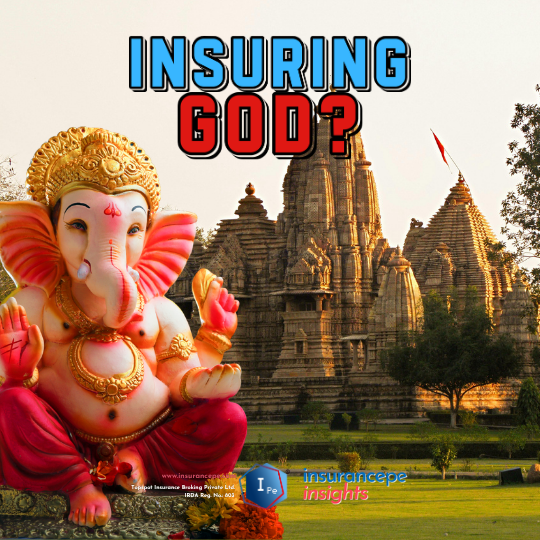
Every year, during the monsoon, as the streets fill with the sound of dhols, India prepares for one of its most beloved and logistically extraordinary festivals: Ganesh Chaturthi. For up to ten days, mandals across the country transform public spaces into elaborately decorated shrines, feeding hundreds of thousands of devotees, staging cultural programmes, and placing idols adorned with gold, silver, and precious stones worth staggering sums. But with so much wealth and value involved, an unusual question arises: Can God be insured?
The 2026 Ganesh festival is no exception. The GSB Seva Mandal at King’s Circle in Mumbai, recognised as the richest Ganesh mandal in the country, has taken an insurance cover of ₹703.27 crore for its 72nd festival. The Maha Ganapati idol will be adorned with over 66 kg of gold and 335 kg of silver, along with precious gemstones donated by devotees and volunteers. More than 40,000 people will receive free meals daily; over two lakh will receive prasad during the five-day celebration.
What does ₹703 crore worth of insurance cover
The headline number represents the combined limits of multiple distinct policies. The component breakdown from the previous year, when the GSB cover was ₹474.46 crore is as follows:
- Personal Accident Insurance: ₹375 crore, the largest single component by far, protecting the army of people who make the festival function: priests, cooks, security guards, drivers, chappal stall workers, valet parking attendants, and thousands of volunteers. If a volunteer falls from scaffolding while decorating the pandal or a cook is injured in the kitchen, this policy responds.
- All-Risk Jewellery and Precious Asset Cover: ₹67 crore, protecting the gold, silver, and gemstone ornaments against theft, accidental damage, and loss during transit to and from the idol.
- Public Liability: ₹30 crore protecting the mandal against legal claims arising from injury to devotees or damage to third-party property during the festival. If a crowd surge injures a devotee, or falling decorations damage a parked vehicle, this is the policy that responds. Public liability does not automatically compensate every injured person, it covers the mandal’s legal obligation to pay where it is found responsible.
- Fire and Special Perils (Contents): ₹2 crore covering the festival’s operational contents: furniture, fixtures, computers, CCTV cameras, QR scanners, utensils, and food supplies including groceries and fruits and vegetables used in the daily annadaan service.
- Fire and Special Perils (Premises): ₹43 lakh covering the pandal structure itself against fire, water damage, and related perils.
Festivals like Dahi Handi and Rath Yatra follow similar insurance logic. For Dahi Handi 2026, the Maharashtra government announced personal accident insurance for 1.6 lakh Govindas, ₹10 lakh cover per participant in the event of accidental death or serious injury. The Shri Amarnath Ji Shrine Board doubled pilgrimage accident cover to ₹10 lakh for registered pilgrims in 2026. During the 2025 Jagannath Rath Yatra in Puri, devotees received ₹5 lakh of accident cover for the duration of the festival. Insurance, in each case, follows the ritual and the risk it creates.
Temple insurance
India’s richest temples hold assets (gold, silver, jewelled ornaments, ancient idols, consecrated structures). Here are some of them which are insured:
- The Tirumala Tirupati Devasthanams in Andhra Pradesh holds over 8,000 kg of gold ornaments, some dating back to the 12th century, with a combined value estimated at around ₹52,000 crore. Insuring them has proved challenging, no single insurer can underwrite a risk of this scale, reinsurance would be required, and arriving at a fair valuation for 600-year-old artefacts with irreplaceable cultural and religious significance is a problem. United India Insurance has provided cover for portions of the jewellery when it is taken out for ceremonies.
- Guruvayoor Temple in Kerala, with 400 kg of gold and ₹400 crore in bank deposits, pays an annual premium of approximately ₹50 lakh for a comprehensive policy that covers land, buildings, jewellery and also its sacred cows and temple elephants, which are themselves significant religious and financial assets.
- Sabarimala, the hill shrine in Kerala visited by millions of Ayyappa devotees annually, insured its assets (including its gold-coated roof) along with buildings and jewellery, and the Kerala government now provides free ₹5 lakh accident cover to all pilgrims undertaking the annual yatra, with the Travancore Devasom Board paying the premium.
What do temple insurance policies cover?
- Property: The temple building itself, gopurams, mandapams, boundary walls, and ancillary structures against fire, lightning, earthquake, flood, and vandalism. Ancient temples present particular valuation challenges because heritage structures cannot simply be replaced with new construction, specialist rebuild costs and restoration requirements must be considered.
- Valuables: Gold, silver, precious stones, antique idols, and ornaments against theft, burglary, and accidental damage. Coverage during transit, when ornaments are carried between storage and the sanctum for ceremonies, is a specific and important component.
- Public Liability: The temple as an institution can be held legally responsible for accidents within its premises. Liability cover protects the trust against such claims.
- Staff: Priests, and temple employees are entitled to workmen’s compensation under Indian law. Personal accident and health coverage for temple staff (includes not just priests but cooks, security personnel, mahouts (elephant handlers), and administrative staff) is standard.
- Theft and Burglary: The frequency of temple robberies in India makes this a genuinely necessary cover. In 2024 alone, several high-profile theft cases from temples in Tamil Nadu, Karnataka, and Odisha made national news, underscoring the risk.
Courts in India have recognised a Hindu idol as a juristic person, capable of holding property in law. But insurance cannot extend to divinity itself. No policy can insure God, but only the associated material assets. Insurance ensures that the financial consequences of an insured events do not destroy the institution, or the people who fund it and serve it.
This blog post is brought to you by the minds at insurancepe!
Got questions or doubts about anyone insurance?
Need advice or help understanding your insurance needs?
Want the best bang for your buck when buying insurance?
We got you!
Reach out to us at:
Whatsapp/Phone: 89779 18030
E-mail: contact@insurancepe.com
Visit us at www.insurancepe.com