
Cooperative insurance? in India? Is it new?
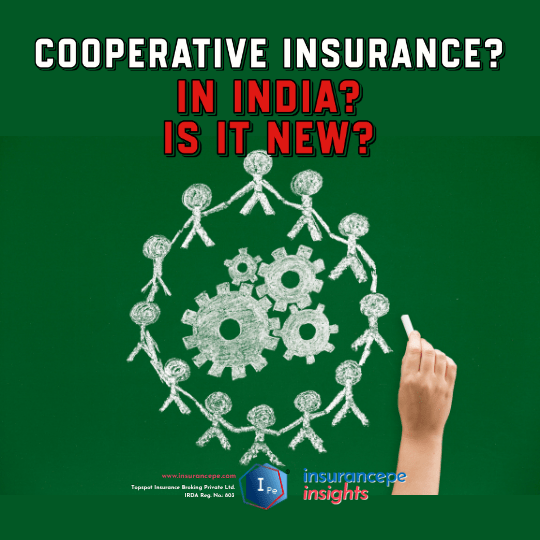
In 1907, a new insurance company was born in one of the rooms of Jorasanko, the ancestral home of Rabindranath Tagore in Calcutta. It was called the Hindustan Co-operative Insurance Company, and it was a direct product of the Swadeshi movement, founded on the idea that Indians should build and own institutions that served Indian needs.
It was not alone. The Co-operative Assurance at Lahore was established in 1906. The United India in Madras followed shortly after. These were not experiments, they were part of a wave of nationalistically motivated insurance ventures, built on cooperative and community principles, at a time when the insurance sector was dominated by British companies with little interest in rural India or ordinary policyholders.
What happened to them? In 1956, the Government of India nationalised the life insurance sector through an Ordinance, and subsequently the Life Insurance Corporation Act. Over 245 Indian and foreign insurers, provident societies, and cooperative insurance entities were absorbed into the newly formed Life Insurance Corporation of India. The cooperative insurance tradition was consolidated into the state.
The announcement by Union Minister on 6 July 2026, that India will establish a new cooperative life insurance company, is therefore not a new or foreign idea. It is a restoration.
What is a Cooperative Insurance Company?
A cooperative (or co-op) insurance company is one where the policyholders and the owners are the same people. When you buy a policy from a cooperative insurer, you are not just a customer, you become a member with a stake in the company. The insurer is democratically controlled: members have a say in how it is run, who governs it, and how its surplus is used.
This stands in sharp contrast to a conventional insurance companies, which is owned by investors/ shareholders whose primary interest is a return on their capital. The differences are significant:
- Ownership: A stock insurer is ultimately accountable to its investors. A cooperative insurer is accountable to its policyholders. The person paying the premium is, in a cooperative, the same person the company is legally required to serve.
- Profits: When a traditional insurer makes a profit, that surplus flows to shareholders, who may have no connection to the insured population at all. In a cooperative, surplus funds belong to the members. They can be reinvested into better coverage, used to reduce future premiums, or distributed back to policyholders as dividends or bonuses. The profit motive is replaced by a service motive.
Cooperative insurers are sometimes called mutual companies, and the mutual insurance model is one of the oldest and most resilient in the world. Some of the largest and most stable insurers globally, including in the UK, Japan, France, and the United States, are mutuals or cooperatives. In India, LIC itself carries some cooperative characteristics, being government-owned and policyholder-surplus-sharing (on certain policies) though it is not a cooperative in the strict structural sense.
What was announced
At the fifth Foundation Day of the Ministry of Cooperation in New Delhi, it was announced that the government would “soon launch a utility aggregator cooperative on the lines of Bharat Taxi and taking lessons from the success of IFFCO-Tokio in providing all types of insurance, we are forming a cooperative life insurance company, which will increase the penetration of cooperatives in the insurance sector.”
The IFFCO-Tokio blueprint?
The cooperative sector has already been playing the insurance game. IFFCO-Tokio General Insurance Company was incorporated in 2000 as a joint venture between the Indian Farmers Fertiliser Cooperative (IFFCO) and Japanese insurer Tokio Marine group, with IFFCO holding 51% and Tokio Marine holding 49%.
IFFCO-Tokio crossed ₹1,000 crores in net premium in 2016–17 and has grown consistently since, offering motor, health, travel, home, and corporate insurance.
What IFFCO-Tokio proved is that a cooperative-rooted company can compete professionally in the Indian insurance market without sacrificing its member-centric character. The proposed life insurance company MAY take that template and apply it to a fundamentally longer-horizon business (term plans, savings-linked policies, annuities, and pensions) which require sustained capital and actuarial discipline over decades.
How the cooperative model could help Life Insurance penetration
India’s cooperative ecosystem encompasses approximately 8.5 lakh cooperatives with over 30 crore members, a network that, if properly connected to insurance products, represents one of the most significant distribution opportunities in the country.
Primary Agricultural Credit Societies (PACS) now function as Common Service Centres, Jan Aushadhi Kendras, and retail fuel outlets, alongside their traditional credit role. More than 54,000 PACS are functioning as Common Service Centres. This physical infrastructure, already embedded in rural and semi-urban India, could serve as the distribution backbone of a cooperative life insurer.
Customer acquisition is one of the biggest cost drivers in life insurance, particularly in rural India where agents must travel significant distances to build relationships that convert to policy sales. A cooperative life insurer built on existing membership networks (dairy cooperatives, credit societies, PACS) could bypass much of this cost, translating it into lower premiums or higher returns for policyholders.
Trust: India’s life insurance penetration stood at just 3.2% of GDP in 2024, against a global average of over 4%. A significant part of the coverage gap in rural India is not a lack of need, it is a lack of trust in distant institutions. Cooperatives, by definition, are member-owned. The policyholder and the shareholder are the same person. That alignment of interest, if structured correctly, is genuinely different from a corporate insurer’s shareholder-first model.
Whether the new entity will be purely cooperative-owned or a joint venture like IFFCO-Tokio remains to be seen.
For now, the announcement is best understood as a signal of direction: the government intends to bring life insurance closer to India’s cooperative heartland, leveraging one of the world’s largest cooperative networks to close an insurance penetration gap that has persisted for decades. Whether the execution matches the ambition will depend on the capital structure, management quality, and product design.
This blog post is brought to you by the minds at insurancepe!
Got questions or doubts about anyone insurance?
Need advice or help understanding your insurance needs?
Want the best bang for your buck when buying insurance?
We got you!
Reach out to us at:
Whatsapp/Phone: 89779 18030
E-mail: contact@insurancepe.com
Visit us at www.insurancepe.com